
Confidentisn'tcorrect:meetCalandHal,theduobehindournewcampaignforgroundedAI
Today we're launching a new brand campaign for Bigdata by RavenPack built on exactly that tension. It features two characters. Cal is calm, grounded and always checks before he speaks. Hal is charming, fast, overconfident, and wrong in ways he never notices. Together they tell the story of grounded versus ungrounded AI, and why the difference matters so much when real money is on the line.
Today we're launching a new brand campaign for Bigdata by RavenPack built on exactly that tension. It features two characters. Cal is calm, grounded and always checks before he speaks. Hal is charming, fast, overconfident, and wrong in ways he never notices. Together they tell the story of grounded versus ungrounded AI, and why the difference matters so much when real money is on the line.
By
Alexandra
·
·

"Your source is you?!"
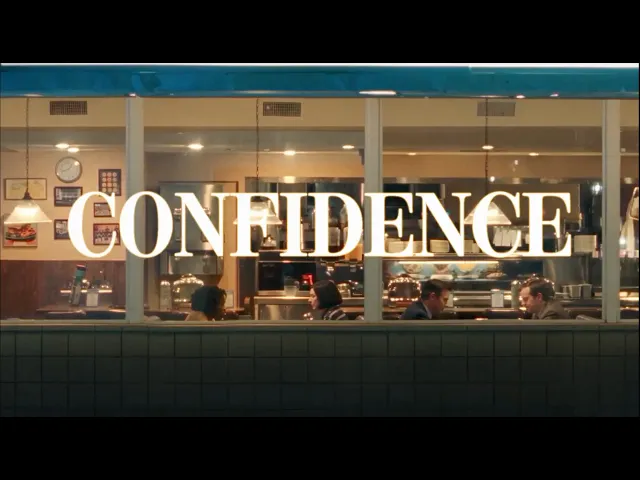
Two men sit side by side. One says the Dow is up 45 points. The other checks and says it's 48. The first agrees it's 49, then insists he said 45 all along. Asked where the number came from, he points at himself.
It's a small, silly moment and, also, it’s the most expensive problem in financial AI today: an answer delivered with total confidence and no source at all.
Today we're launching a new brand campaign for Bigdata by RavenPack built on exactly that tension. It features two characters. Cal is calm, grounded and always checks before he speaks. Hal is charming, fast, overconfident, and wrong in ways he never notices. Together they tell the story of grounded versus ungrounded AI, and why the difference matters so much when real money is on the line.
What we stand for: data first, always
Generative AI can now produce unlimited content in seconds. That makes the scarce things more valuable, not less: trusted data, verified information and human insight. This is the core of our manifesto, The Data-First Imperative, and it rests on four principles:
Data integrity above all. An AI system is only as strong as the data behind it. We hold ours to the standards of quality journalism: accuracy, rigor and truth.
Transparency is non-negotiable. Every insight should be traceable to its source, and every output accountable. Provenance and licensing matter.
Responsibility in every layer. AI should amplify human judgment, not replace it. People stay in control.
Trust is our north star. Information only has value when its source can be trusted, so we put verified, high-quality content ahead of noise.
In practice, this means Bigdata answers are grounded in curated, licensed, authoritative sources from partners such as the Financial Times, S&P Global, FactSet, MT Newswires, Preqin and many more, not in random text scraped from the internet.
"In finance, a wrong answer that sounds right is worse than no answer at all," says Jacob Fant, Chief Marketing Officer at RavenPack. "As marketers, we're allowed to be creative with how we tell a story, never with the facts inside it. Our product lives by the same rule: every number comes with a source you can click, check and defend. The creative job was to make that principle impossible to forget."
From manifesto to creative: why we built a duo
Principles are easy to agree with and hard to feel. So we asked ourselves a simple question: what does ungrounded AI actually look like?
The answer was a person. We all know him. He answers every question instantly. He never says "I'm not sure." He sounds exactly as convincing when he's wrong as when he's right. That last trait is the real danger, because a wrong answer looks identical to a right one.
A character like that only works with someone next to him. Put a calm, grounded counterpart beside him and the contrast does the explaining for us. One improvises; the other checks. One is certain; the other is correct. The tension between them is the whole argument of the manifesto, told in thirty seconds.
We chose humor on purpose, and we're happy to cite our own source of inspiration: Anthropic's Super Bowl ads for Claude, which showed how well AI behavior lands when a real person plays the part. Financial professionals have heard plenty of warnings about AI risk. What they haven't had is a way to laugh at the problem they deal with every day, and then recognize it the next time an assistant hands them a number without a source.
"We didn't want to make another ad about AI risk," adds Jacob. "We wanted people to recognize Hal instantly, because they've already met him. Once you've laughed at him, you can't unsee him in the tools you use every day."
Meet Cal and Hal

Cal, short for Calculated, is balanced, patient and quietly precise. He doesn't raise his voice or overclaim. When he gives you a number, he's already checked it, and he can tell you where it came from. He is what AI should feel like when it's working for you: current, sourced and trustworthy.
Hal, short for Hallucinating, is everything else. Warm, eager, instantly responsive, and almost never right for the right reasons. Across four short films, he shows the four ways ungrounded AI fails:
Overconfident. He reports the Dow as up 45 points, then 49, then 45 again, while his colleague reads 48 straight from the screen. When pressed for a source, he admits the source is himself.
Hallucinating. He urges his colleague to buy jewelry for a wife who doesn't exist. Corrected, he pivots to a husband, then two children with specific ages, then a fishing hobby, inventing each detail as smoothly as the last.
Expired. Asked how to get better at trading, he promises someone current, trained in real time, with cited sources. What arrives is a fax of yesterday's numbers.
Fake. He admires a very muscular man and assumes the results came from hard work. The reveal: an inflated suit. Impressive on the outside, empty underneath.
Each film is a familiar failure mode dressed as a joke. Unsourced confidence. Invented details. Stale data sold as live. Surface polish with nothing behind it. Cal doesn't need to lecture anyone. He just asks the question every investor should ask: where did that come from?
What the campaign is really saying
Under the humor, the message is serious. Ungrounded AI answers from memory: patterns absorbed during training, months or years old, with no way to check. Grounded AI looks things up first, then answers from real material and shows its sources. For a quarterly revenue figure, an earnings date or a compliance detail, that difference decides whether you can act on the answer.
Grounding alone isn't the finish line, either. What an assistant is grounded in matters just as much. For financial questions, good grounding means four things:
Current: this quarter's numbers, not yesterday's fax.
Entity-resolved: the company and ticker you meant, not a similarly named one.
Point-in-time: what was actually knowable on the date in question.
Traceable: a link to the specific filing, transcript or article, not "public sources."
That's the bar Bigdata is built to meet, and it's the bar Cal represents. We want every analyst, portfolio manager and researcher who sees these films to hold their AI tools to it too.
"Cal isn't the flashy one, and that's the point," says Jacob. "Trust in finance isn't built on charisma. It's built on showing your work, every single time. Hal is funny because he's familiar. Our goal is that, after watching him, nobody finds him convincing anymore."
Stay grounded in sources that move markets
The AI conversation in finance is moving from "what can it do?" to "can I trust it?" Our answer comes together under one tagline: Sources that move markets.
It works on two levels. Markets move on information: an earnings release, a regulatory filing, a headline that breaks before the open. Those are the sources Bigdata is built on, from licensed news and transcripts to filings and structured data from partners like the Financial Times, S&P Global, FactSet, The Economist Intelligence Unit and many more. And a source is exactly what separates the two characters: Hal has opinions; Cal has sources.
That's also why this campaign isn't a case against general-purpose AI. Models like Claude and ChatGPT are remarkably capable, and they become even more powerful when they're grounded in trusted data and in the sources that move markets. The model brings the reasoning; the sources bring the facts. Put them together and you get Cal, not Hal.
You'll see Cal and Hal across LinkedIn, YouTube, industry events over the coming weeks. Watch the films, share the one that best resonates, and when you want answers grounded in filings, transcripts and licensed news rather than the open web, try Bigdata.com.
"This campaign is our manifesto with a sense of humor," concludes Jacob. "The characters make you smile, but the question they leave you with is serious: can your AI tell you where that number came from?"
"Your source is you?!"
Two men sit side by side. One says the Dow is up 45 points. The other checks and says it's 48. The first agrees it's 49, then insists he said 45 all along. Asked where the number came from, he points at himself.
It's a small, silly moment and, also, it’s the most expensive problem in financial AI today: an answer delivered with total confidence and no source at all.
Today we're launching a new brand campaign for Bigdata by RavenPack built on exactly that tension. It features two characters. Cal is calm, grounded and always checks before he speaks. Hal is charming, fast, overconfident, and wrong in ways he never notices. Together they tell the story of grounded versus ungrounded AI, and why the difference matters so much when real money is on the line.
What we stand for: data first, always
Generative AI can now produce unlimited content in seconds. That makes the scarce things more valuable, not less: trusted data, verified information and human insight. This is the core of our manifesto, The Data-First Imperative, and it rests on four principles:
Data integrity above all. An AI system is only as strong as the data behind it. We hold ours to the standards of quality journalism: accuracy, rigor and truth.
Transparency is non-negotiable. Every insight should be traceable to its source, and every output accountable. Provenance and licensing matter.
Responsibility in every layer. AI should amplify human judgment, not replace it. People stay in control.
Trust is our north star. Information only has value when its source can be trusted, so we put verified, high-quality content ahead of noise.
In practice, this means Bigdata answers are grounded in curated, licensed, authoritative sources from partners such as the Financial Times, S&P Global, FactSet, MT Newswires, Preqin and many more, not in random text scraped from the internet.
"In finance, a wrong answer that sounds right is worse than no answer at all," says Jacob Fant, Chief Marketing Officer at RavenPack. "As marketers, we're allowed to be creative with how we tell a story, never with the facts inside it. Our product lives by the same rule: every number comes with a source you can click, check and defend. The creative job was to make that principle impossible to forget."
From manifesto to creative: why we built a duo
Principles are easy to agree with and hard to feel. So we asked ourselves a simple question: what does ungrounded AI actually look like?
The answer was a person. We all know him. He answers every question instantly. He never says "I'm not sure." He sounds exactly as convincing when he's wrong as when he's right. That last trait is the real danger, because a wrong answer looks identical to a right one.
A character like that only works with someone next to him. Put a calm, grounded counterpart beside him and the contrast does the explaining for us. One improvises; the other checks. One is certain; the other is correct. The tension between them is the whole argument of the manifesto, told in thirty seconds.
We chose humor on purpose, and we're happy to cite our own source of inspiration: Anthropic's Super Bowl ads for Claude, which showed how well AI behavior lands when a real person plays the part. Financial professionals have heard plenty of warnings about AI risk. What they haven't had is a way to laugh at the problem they deal with every day, and then recognize it the next time an assistant hands them a number without a source.
"We didn't want to make another ad about AI risk," adds Jacob. "We wanted people to recognize Hal instantly, because they've already met him. Once you've laughed at him, you can't unsee him in the tools you use every day."
Meet Cal and Hal
Cal, short for Calculated, is balanced, patient and quietly precise. He doesn't raise his voice or overclaim. When he gives you a number, he's already checked it, and he can tell you where it came from. He is what AI should feel like when it's working for you: current, sourced and trustworthy.
Hal, short for Hallucinating, is everything else. Warm, eager, instantly responsive, and almost never right for the right reasons. Across four short films, he shows the four ways ungrounded AI fails:
Overconfident. He reports the Dow as up 45 points, then 49, then 45 again, while his colleague reads 48 straight from the screen. When pressed for a source, he admits the source is himself.
Hallucinating. He urges his colleague to buy jewelry for a wife who doesn't exist. Corrected, he pivots to a husband, then two children with specific ages, then a fishing hobby, inventing each detail as smoothly as the last.
Expired. Asked how to get better at trading, he promises someone current, trained in real time, with cited sources. What arrives is a fax of yesterday's numbers.
Fake. He admires a very muscular man and assumes the results came from hard work. The reveal: an inflated suit. Impressive on the outside, empty underneath.
Each film is a familiar failure mode dressed as a joke. Unsourced confidence. Invented details. Stale data sold as live. Surface polish with nothing behind it. Cal doesn't need to lecture anyone. He just asks the question every investor should ask: where did that come from?
What the campaign is really saying
Under the humor, the message is serious. Ungrounded AI answers from memory: patterns absorbed during training, months or years old, with no way to check. Grounded AI looks things up first, then answers from real material and shows its sources. For a quarterly revenue figure, an earnings date or a compliance detail, that difference decides whether you can act on the answer.
Grounding alone isn't the finish line, either. What an assistant is grounded in matters just as much. For financial questions, good grounding means four things:
Current: this quarter's numbers, not yesterday's fax.
Entity-resolved: the company and ticker you meant, not a similarly named one.
Point-in-time: what was actually knowable on the date in question.
Traceable: a link to the specific filing, transcript or article, not "public sources."
That's the bar Bigdata is built to meet, and it's the bar Cal represents. We want every analyst, portfolio manager and researcher who sees these films to hold their AI tools to it too.
"Cal isn't the flashy one, and that's the point," says Jacob. "Trust in finance isn't built on charisma. It's built on showing your work, every single time. Hal is funny because he's familiar. Our goal is that, after watching him, nobody finds him convincing anymore."
Stay grounded in sources that move markets
The AI conversation in finance is moving from "what can it do?" to "can I trust it?" Our answer comes together under one tagline: Sources that move markets.
It works on two levels. Markets move on information: an earnings release, a regulatory filing, a headline that breaks before the open. Those are the sources Bigdata is built on, from licensed news and transcripts to filings and structured data from partners like the Financial Times, S&P Global, FactSet, The Economist Intelligence Unit and many more. And a source is exactly what separates the two characters: Hal has opinions; Cal has sources.
That's also why this campaign isn't a case against general-purpose AI. Models like Claude and ChatGPT are remarkably capable, and they become even more powerful when they're grounded in trusted data and in the sources that move markets. The model brings the reasoning; the sources bring the facts. Put them together and you get Cal, not Hal.
You'll see Cal and Hal across LinkedIn, YouTube, industry events over the coming weeks. Watch the films, share the one that best resonates, and when you want answers grounded in filings, transcripts and licensed news rather than the open web, try Bigdata.com.
"This campaign is our manifesto with a sense of humor," concludes Jacob. "The characters make you smile, but the question they leave you with is serious: can your AI tell you where that number came from?"



Developers
© 2026 Bigdata.com by RavenPack. All rights reserved.
Developers
© 2026 Bigdata.com by RavenPack. All rights reserved.